Showing posts with label Modules. Show all posts

Friday, 24 November 2023

Thoughts of LF1 The 9


“O, be some other name!
What's in a name? That which we call a rose
By any other name would smell as sweet”
– Romeo and Juliet, William Shakespeare


LF1 The 9
The Great Empire once stood as a testimony to the heights to which man might aspire – but no more. Decades of corrosion from within the realm and the weight of a terrible war left the once-proud nation’s common folk helpless prey for the nightmarish horrors that now stalk its bounds. While few remain to defend these innocents, one such group is the 9th Division of the Sign of the Crimson Wyvern.
This is their tale.
– The 9


Those who read my blog regularly will know that I’ve been doing a deep dive into the See of Medegia these past weeks; so it’s fortuitous that Carlos Lising has published a module – a bit if a gazetteer, really – set within the ill-fated province of the See of Vanthrace – that rose by any other name.
I’m pleased that he did, because modules set in the east map of the Greyhawk setting are few and far between; so sparse, in fact, that I’ve resorted to listing generic adventure modules from Dragon and Dungeon Magazines under the headings for “Adventures in this country…” and “… in nearby areas…” for more than a few of of my Primers for regions along the Solnor coast.
That lack has been addressed in The 9.
The rotting corpse of the Great Empire spans much of the continent’s eastern coastline, the vast expanse of the Sollonor Ocean lapping upon its rocky shores. At one time, this was a land of peace and plenty. […]
Horrors Aplenty Stalk the Land
Horrors aplenty stalk the land, now, picking the bones of the skeletal farms and homes for what scant valuables might remain within them. These humanoids, once set upon them by even more wicked men, have entrenched themselves in these places, ever eager for the fray – for the chance to kill and to take whatever might be of use from the cooling bodies of those so foolish as to challenge them. Worse, even the humanoids must fear the unspeakable horrors of that given birth in the most terrifying of places within this cursed land – that place known as the Womb of the Black Goat, which must be the very heart of darkness itself. [LF The 9 – 1]

That passage sums up what we know about the See of Medegia, doesn’t it?
Medegia passed into history. […] [T]he Overking ordered an orgy of brutality and destruction inflicted on it and its inhabitants. Rape, pillage, torture, and the suffering of every man and woman in Medegia were what Ivid ordered, and his army was pleased to obey. Medegia was utterly despoiled, and what remains of it is barren and underpopulated. Its few surviving inhabitants are bitter, twisted, and half-mad people tormented by fiends and petty despots.
Throughout the remains of the Great Kingdom, the ordinary people are wretched, desperate, and embroiled in chaos and madness. The rich resources of the lands are utterly neglected, despoiled, or ignored. Mutual trust is virtually nonexistent, even within the ties of blood and family in many instances. Aerdy is in utter turmoil, and perhaps even Istus herself knows not the fate of these lands in such times. [FtAA – 27]
Medegia is thus a land of absolute anarchy. Its population is decimated. Only the pathetically poor, feeble-minded, aged, infirm, and those too sunk into despair and stricken with terror remain.
Outside of Pontylver, not many fiends stalk the lands. However, there are orcs, deserting soldiers, and ex-mercenaries who have taken to a life of pillaging what they can from this land.
Fields are unsewn with seed and tuber here, and most livestock has long been eaten. Many of those left are close to starvation, and they suffer deficiency diseases (scurvy, rickets, and the like) as a result. Medegia is grim indeed. [Ivid – 104]

Beset by Chaos and Banditry
That paints a rather grim place to place a campaign setting. Who would wish to adventure there? None – or very few – I expect.
Perhaps one ought to, though. Why? Because The 9 is very much like an earlier adventure module we all know and love.
I speak of B2 The Keep on the Borderlands.
The Realm of mankind is narrow and constricted. Always the forces of Chaos press upon its borders, seeking to enslave its populace, rape its riches, and steal its treasures. If it were not for a stout few, many in the Realm would indeed fall prey to the evil which surrounds them. [B2 Keep on the Borderlands – 6]
The two bear striking similarities. They ought to because Carlos Lising has said as much. The 9 is his homage to that very adventure, to that lone keep on a hill, beset by Chaos and Banditry; and those who stand against it.
[T]here are always certain exceptional and brave members of humanity, as well as similar individuals among its allies — dwarves, elves, and halflings — who rise above the common level and join battle to stave off the darkness which would otherwise overwhelm the land. [B2 – 6]

The Keep on the Borderlands
Ahead, up the winding road, atop a sheer-walled mount of stone, looms the great KEEP. Here, at one of civilization's strongholds between good lands and bad [.]
[B2 – 6]
The place is known as Bulwark.
It is said that the edifice has gazed down upon the countryside within the region for hundreds of years. [LF – 10]
This whole place is well-organized for security and for defense. In time of need, many civilians will arm and help man the walls, while non-combatants bring ammunition, food, and water to the walls and help the wounded. Sentries are alert. A party of guards patrols the walls irregularly, and a commander checks every half hour to hour. [B2 – 6]
So it is that Bulwark still gazes down upon the lands of Vanthrace from the heights of the stones from which it was raised. But any joy or merriment that might be found there has long fled the fortification. Instead, it has been replaced by a grim, fatalistic reality. Vanthrace is yet overrun by bandit gangs, rapacious humanoids, fiends hailing from the deepest bowels of Hell itself, and unknowable creatures that seem to rebuke reality for their very existence. [LF – 10]

There are differences, obviously. The Keep on the Borderlands did not guard against such horrors as Bulwark does, but the intent is very much the same. Bulwark is the vanguard. Should it fall, the entire countryside would fall with it.
That said, The Keep… and The 9 are very much alike in that they are written for low level play. How might that be so?! Medegia… Vanthrace is overrun by devils and demons! How might low level characters survive against such foes? Because they shouldn't have to, not at first; because once upon a time there was a little thing referred to as the Flight of Fiends.
 Fiends Stalk the Lands
In Coldeven of 586 CY, word spread through Furyondy of an extraordinary event. [TAB – 19]
In a stirring private ceremony attended by the entire College of Bishops, Canon Hazen (along, it is said, with help from the archmage Bigby of Mitrik) employed the fabulous artifact to trigger the Flight of Fiends, a wholesale purge of demons throughout the Flanaess. [LGG – 130]
There are still fiends in Vanthrace, however. Not many, but some lesser fiends still stalk the land.
Although few fiends stalk the lands here, bloodthirsty humanoids, amoral deserters from the Emperor’s armies, and cutthroat bandit gangs are plentiful across the See’s landscape, pillaging what they can from this land in order to survive. [LF – 6]
It is against these that Bulwark stands: orcs, hobgoblins, bandits, mercenaries, slavers, and imperial soldiers. All low level encounters. And in that The 9 most resembles The Keep on the Borderlands.
The Keep on the Borderlands, INTRODUCTORY MODULE FOR CHARACTER LEVELS 1-3
Lord Morrow Lyrwick
The 9, INTRODUCTORY MODULE FOR CHARACTER LEVELS 1-3
The 9 has been designed to allow four to seven 1st level PCs to play out many adventures, gradually working up to second or third level of experience in the process. [LF1 – 8]
So yes, even the fiends and are low level encounters.

Both B2 and LF1 are mini gazetteers, both are sandbox adventures, and both are designed for low level play.
Both have a keep on a hill, both have a number of overland encounters, and both have a dungeon to be explored. Carlos Lising’s The 9, to my mind, is a little more focussed than Gary Gygax’s Keep on the Borderlands, insofar as it appears that the residents of Bulwark are far more desperate and thus all are pulling together in the same direction (kind of); but that said, any sandbox gazetteer can be what you make it to be.
What The 9 has that Keep lacks is pregens. There are 7 all told, each with a backstory that helps fill in local lore. I love that; it reminds me of those in Tamoachan and Isle of the Ape.

Bulwark takes up a sizable chunk of the early pages. NPCs are named and detailed. They are given a backstory and motivation – something buried in subtext in Gygax’s Keep.
Beyond Bulwark...
Beyond Bulwark’s formidable walls are a number of encounter areas, none mapped but one. One could criticize this lack, but Carlos has focussed his energies on where he believes most of the action will revolve around: the Keep and the Dungeon. How are those maps? Serviceable. There are better out there (check out early TSR UK modules for those keeps I consider the best); and I have yet to encounter a D&D Mine that I would call realistic (mining was my stock in trade, so don’t argue with me; I know of what I speak); that said, the maps are at the very least on par with those in B2 (and I wonder how many people criticized those, then or now?).
Carlos does detail wandering monsters admirably, most of which are of the “Use Standard Encounter Table” variety, or Human in nature. Fiends are few and far between, as they should be – they will likely probably never even be encountered, in fact.
Most of this weighty tome features Caldera’s Burrow, the dungeon. It is there that this module heats up. And it is there that only the truly cautious should venture.
A word to the wise: This can be a very lethal module. Can be? It is. But it is a very satisfying one, too.
There are rumours to entice, new spells, new monsters, those aforementioned Lesser and Proto Fiends. Some are created for the DM, but there are tables on how to create new ones, too.
So, how can there be fiends in Vanthrace when they were put to flight? That is explained within. To mention how, here, would be to spoil Carlo’s adventure – and we can’t, and shouldn’t have that, should we.

The 9 was written with the OSRIC game system in mind, most easily adapted to AD&D 1e.
The 9 has been designed in such a way that it can be placed in any published or homebrewed Campaign Setting with little difficulty. It has been written so as to be usable with the OSRIC™ Role-Playing System and is thus easily adapted to many of the most popular fantasy RPG rulesets. It can easily be adapted for use as either a one-shot adventure or worked into an ongoing Campaign with little in the way of alteration on the part of the Game Master (GM). [LF – 1]

Hell-on-Oerth
The question is: Should one drop their hard-earned money on Carlo’s The 9?
Well… do you adventure in Greyhawk? Have you though about adventuring on the east side of the map? If the answer to either of those questions is yes, I would say the answer is yes. The 9 is more than just an adventure module. It’s a gazetteer. And it’s a teaching tool, too. It takes the terror out of the supposed fiend-infested province of Medegia and makes it manageable. Realistically. Imagine, if you will, if there truly still were fiends ravaging Medegia (or Vanthrace, if you will); how long then would it be before those fiends overwhelmed the whole of the Flanaess? Who could stop them? Most men-at-arms are only 0-level, and even most adventurers less than 5th (realistically); so, how long then could they stand against that unrestrained Hell-on-Oerth? Carlos levels the field, so to speak, but he does not make Medegia a cakewalk. Far be it. Doom looms over Vanthrace. You'll understand why when you read The 9.
I must say that you get a lot of bang for your buck in this publication! At the time of this posting LF1 is $20-26, depending on your choice of purchase. That’s cheap for over 100 pages of content. It does lack interior art, but which would you rather, a page or two of illustrations or text? It does have excellent regional and local maps, and exhaustive maps of both Bulwark and Caldera’s Burrow.
Perhaps the most important reason to purchase this publication is that Carlos Lising is creating new content that can be slipped into Greyhawk. Few others are.

So, what say you? Will you answer the call? Will you rise up and face the evil that has laid Medegia so low?
“Never in the field of human conflict was so much owed by so many to so few.”
― Winston Churchill

Or is Medegia to be lost for all time?
“There are no heroes...in life, the monsters win.”
― George R. R. Martin


One must always give credit where credit is due. This piece is made possible primarily by the Imaginings of Gary Gygax and his Old Guard, Lenard Lakofka among them, and the new old guards, Carl Sargant, James Ward, Roger E. Moore. And Erik Mona, Gary Holian, Sean Reynolds, Frederick Weining. The list is interminable.
Very special thanks to Carlos Lising, without whose efforts, this piece could never have existed.


The Art:
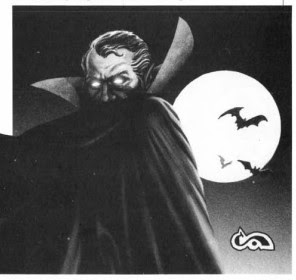
The 9, by Daniel Govar, from LF1 The 9, 2021
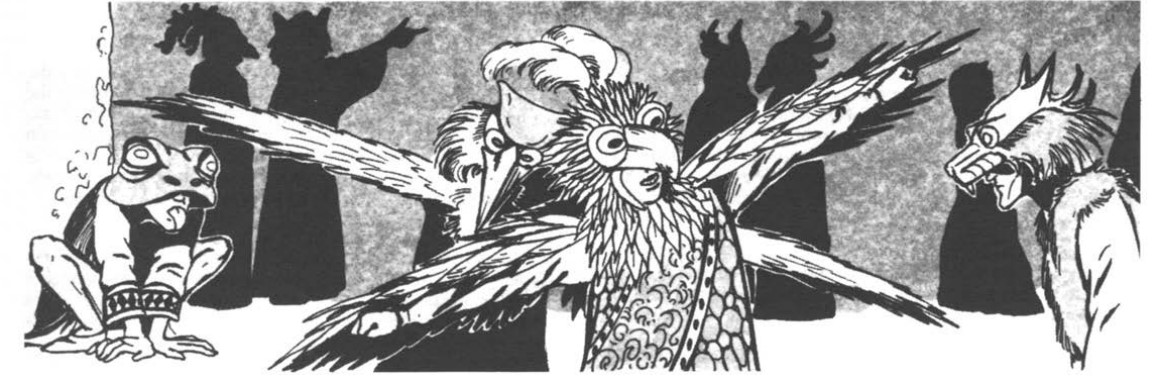
Fiends!, by Daniel Govar, from LF1 The 9, 2021
The Caves of Chaos, by Jim Roslof, from B2 The Keep on the Borderlands, 1980,1981
The Keep on the Hill, by Erol Otus, from B2 The Keep on the Borderlands, 1980,1981
Lord Morrow Lyrwick, by Cayde Anderson, from LF1 The 9, 2021
The Hermit, by Erol Otus, from B2 The Keep on the Borderlands, 1980,1981

Source:
1015 World of Greyhawk Boxed Set, 1983
1064 From the Ashes Boxed Set, 1992
2011A Dungeon Masters Guide, 1st Ed., 1979
2010, Players Handbook, 1st Ed, 1978
9025 World of Greyhawk Folio, 1980
9032 C1 The Hidden Shrine of Tamoachan, 1980,1981
9034 B2 The Keep on the Borderlands, 1980,1981
9153 WG6 Isle of the Ape, 1985
9577 The Adventure Begins, 1998
WGR7 Ivid the Undying, 1995
11743 Living Greyhawk Gazetteer, 2000
OSRIC, 2006

Friday, 20 October 2023

Thoughts on I10 Ravenloft II: The House on Gryphon Hill


What cause have you to fear the darkness of the night, when within your own heart is darkness itself?
Why then judge you my works so harshly.”
– COUNT STRAHD VON ZAROVICH [I10 Ravenloft II: The House on Gryphon Hill – 2]


I10 Ravenloft II: The House on Gryphon Hill
The master of Gryphon Hill bids you welcome and hopes that you have a pleasant stay. Please forgive him if he does not greet you, for he is rather involved in a little experiment at the moment. No doubt he will call upon you when your services are required.
[I10 – 2]
If the above quote doesn’t inform you that this sequel is very different from the original, nothing will. Unprepared, you probably wouldn’t like this adventure, especially if you were enamoured with I6 Ravenloft. I6 is very much an AD&D adventure module steeped with gothic elements. It attempts to be a horror story; and it succeeds in that regard only so far as the mechanics of the game allows it. It’s dark. It’s moody. A storm rages. Cobwebs and dust cover corners and every surface. But its castle is far more Victorian that Mediaeval. And there’s an organ in it, for God’s sake. One imagines Toccata in D minor echoing throughout. I do, anyway. But it is still D&D. One gets what one expects: spiders, gargoyles, an abundance of undead. And vampires. It’s an homage to Dracula, after all. Count Strahd von Zarovich, by any other name…. But is it scary? Not really. Like I said: it’s D&D. The only terror the players are probably going to feel is the likelihood that their characters are going to die. And they are very likely going to, too. Note undead, above. A great many drain levels.

Baravia
Is its sequel as potentially lethal as its predecessor? It might be. In that it is very much alike Ravenloft. But it is also very different, too. It’s almost twice as long as the original. It’s far more detailed. There’s more of a story. And it is also decidedly more Gothic. Where the first is a vampire hunt (and a battle for survival), this adventure is as much a mystery to be unravelled as it is – again – a vampire hunt. There are allusions to Robert Lewis Stevenson’s The Strange Case of Dr. Jekyll and Mr. Hyde, to Mary Shelley’s Frankenstein, and to Author Conan Doyle’s The Hound of the Baskervilles – or to the film adaptations of these classic works, anyway. And to Lord Byron, too, to name drop.
The premise: The citizenry is being preyed upon – a la Orlane in N1 Against the Cult of the Reptile God – but not in the way you think. The people are frightened, or oblivious to their danger, or vacant and supposedly skeptical of any at all. But this is not the reason why the PCs were lured to the sleepy village of Mordentshire. It all began when a certain noted Alchemist, one Count Strahd von Zarovich, came to town….
The High Faith received a letter a short while ago from Lord Byron Weathermay of Mordentshire, a small seacoast hamlet. Lord Byron’s daughter, Lady Virginia Weathermay, is set to marry a newcomer to the region, named Count Strahd Von Zarovich. While this Strahd fellow seems to be an appealing chap, Lord Byron feels there is something unnatural about him, and before giving up his only daughter has asked the Faith if they would dispatch some investigators for some discreet checking. The Faith has in the past received large building donations from the Weathermays, and so dispatched your party to deal with the matter. [I10 – 10]
Were it that simple. It never is, is it?
At the start of the adventure, the player characters are recovering from a raging fever and may not remember all the circumstances of their recent mission. [I10 – 10]
They have no recollection of their travels, only this horrific encounter:
A Black Figure
A darkness clouds this room and the essence of evil permeates the very air. The smell of freshly turned earth is here. This room appears to be 50 feet long from east to west and 30 feet across. There are three empty alcoves in the south wall. Settled into the dirt on the floor, lies a shining black coffin of finely waxed wood. The coffins fittings are of polished brass. The lid is closed.
There is a strange feeling to the room as though you are looking at it through a fog.
Suddenly, a resounding shriek of metal fills the tomb! A heavy steel portcullis crashes down, blocking the stairs to the north by which you entered this room. The lid to the coffin is flung open and a black figure flies high into the air, hovering near the darkened ceiling! [I10 – 12]
They fought. They may even have died!
You have been defeated!. You see the dark, twisted visage of the vampire moving toward you, his hand outstretched. You cannot move! You cannot even scream! He smiles at the terror in your eyes... his hand reaching out toward your throat as he seeks to steal the last of your life from you… as you…
…suddenly awaken, sitting bolt upright in your bed. The dying echo of your screams resound around you. Cold sweat soaks the bed sheets and trickles down your back.
It seemed so real! The great towers of some place called Ravenloft ... the misty vales and the terrible tragedy of a man who had sold his soul to unlife. Too much to drink? Och, last night! Perhaps the mutton was not quite done.
Cold Sunlight
The cold sunlight of a dying fall streams into your window. The inn room comes slowly into focus around you. Hovering over you are people you have never seen before. They look concerned, yet pleased that you are awake. Weakly looking about the room, you see your companions, sprawled in cots lined against the wall of the room. None of them look as if they had much better sleep than you. Each lies weakly in bed, occasionally moaning or breaking into feverish starts.
[I10 – 12]
Then they awoke, the past three days blank!
The player characters will discover when they check that their gear is missing from their room. They can learn from Marion Atwater, the servant girl attending them, Dominic the Innkeeper or Docteur d’Honaire, that when the fever overtook them they were first overcome with delirium and threw their gear about and attacked phantoms, damaging their weapons and equipment. All their gear was thus removed for safekeeping elsewhere. Damages have [already] been paid for by Lord Weathermay, and he instructed that the heroes' equipment was to be repaired and cleaned at the various businesses around town. [I10 – 13]

Our PCs, after a period of rest, will obviously want to retrieve their equipment. They descend from their sickbeds, where they meet the good Docteur d’Honaire, the resident physician of Saulbridge Sanitarium. He knows all the PCs by name, as he has been attending them ever since the onset of the malady. [I10 – 13]
They then encounter a madman who raves: “Thieves! Murderers! You’ve taken them . . . You’ve taken [,] taken them all! The village is empty . . . desolation! Despair! Where are the people? Where are the childrennnnnnn!? [I10 – 13]
Thus their ordeal begins. As they collect their gear, they may note that some of the good people of Mordentshire are not quite right….
Mordentshire was once an open and happy community, a friendly place to live. More and more lately, [however], the people here have become standoffish. Many used to say that it was all the cause of that new fellow moving into the old Gryphon Hill estate. Now few wish to talk at all. [I10 – 19]
They have reason to be afraid. They can be grouped into three categories:
  1. The Unknowing: These include those good citizens who are unaware that something sinister is happening. They believe that life is proceeding normally, save for occasional isolated cases of fever and delirium the affect some of the citizens.
  2. The Fearfully Silent: These residents know something of what is happening… some more than others… but fear the same fate so greatly, they keep their silence. These will react with fear and distrust of all who are strangers, and will hide behind a mask of rudeness, apathy, and anger.
  3. The Converted: These residents are no longer truly human, for an evil spirit now occupies this body, the human soul trapped elsewhere in the evil form. These all act quite differently from the other townspeople. They always have a rather vacant expression and often seem as though they are not paying any attention. They will answer questions but will find some excuse to then leave. Their manner may easily be mistaken for stubbornness or a distrust of strangers. They speak in slow and lifeless flat tones. Any work which they are observed performing is always without enthusiasm or even progress. For example, an innkeeper might clean the same glass repeatedly. However, these same people will. on the command of their master, become a fierce and terrible force for evil. [I10 – 19]

Can the PCs save the good people of Mordentshire? That remains to be seen. The clock is ticking! They have only five days to do it!
Luckily, there’s a timeline chart within to help the DM keep track of what goes on, hour by hour for those days. That will truly be a godsend, because there’s a lot going on in this module, and far too little help in my opinion keeping it all straight – it’s going to require extensive reading and a nimble memory for retention!
Why?
  • Weather plays a part in the story and the PCs reactions.
  • There’s a detailed Cargo Roster of 20 shipments, but only 12 noted shipping times.
  • Times for “Conversions,” otherwise called Transpossessions. Some are marked with asterisks, although I can’t for the life of me discover why that might be.
  • There are 52 NPCs; and 52 potential transpossessions with noted “Creatures of the Night.” Few NPCs are given alignment, only the most important: Lord Byron Weathermay, Lady Virginia Anne Weathermay, and Mistresss Ysilda Gemanine Ardent; the rest are detailed in an exhaustive list beside the “Creatures of the Night.” This list is important as printed because each has a “Match” column where their transpossessions can be noted.
  • And of course, there is Strahd: his manifestation, his motivation, and the placement of the McGuffins to be predetermined, and potentially swapped out (much as they might be in the original Ravenloft). Where this was done using dice rolls and Tarot cards in I6, this is done with dice rolls and The Mesmerists Pendulum in I10. (Back in 1986 this might have necessitated the partial destruction of the trifold cover – or the meticulous copying onto menu cards, or some such – if a copier was not available to you.) It’s cumbersome, and not as well realised as was the Tarot card reading in the original.

This adventure is VERY fluid and freeform. It is not a railroad. Although it is best if the PCs proceed by chapter, as presented.

I’m not going to go into the adventure. That would spoil the fun, and it would make this a very long post indeed. But I will say that the plot plays out in the town, the moors, and then in the manors of Gryphon Hill and Heather House. And that the PCs have McGuffins to search for, just as they did in the original. Last time is was the Holy Symbol of Ravenkind and the Sunsword, this time it’s The Alchemist’s Diary, The Missing Entry, The Soul Searcher Orb, The Ring of Reversion, The Rod of Rastinon, and The Apparatus. Their placement (aside from the Apparatus) is randomised, much like Strahd’s state and motive, much like they were in I6, presumably to make the module replayable. The town is laid out, but none of the buildings. Gryphon Hill and Heather House are fully realised, being the most important locales of the adventure.
Is this a good adventure? I think so. It is gothic in the extreme, inspired by some of the most evocative classic literature, and I believe it does its damnedest to live up to its inspirations.
Is this a great adventure? It could be, but it has its flaws. It is almost twice as long as I6, and much like a lot of modules of its era, it is not laid out as efficiently as it might be. The plot is presented as a series of Events; then the chapters follow, where the town buildings and manor rooms are detailed as all adventures are.
I especially love the Pregens listed.

ROGOLD GILDENMAN
LG 8th-level Cleric
Rogold Gildenman is one of the Clerics of the High Faith in Osterton, three days journey to the north. The church has received numerous building donations over the years from the Weathermays of Mordentshire, so when a plea for aid arrived from Lord Byron, head of that family, the Church was more than eager to lend whatever help available. This aid consists of charging Rogold with the task of assembling a hardy crew of seasoned adventurers and investigating the matter. Most of the party owes the High Faith in one degree or another, and this mission should clean up a lot of old debts. (In Rogold’s case, a rich parish to the East has been awarded by the Crown to the High Faith, and suitable candidates to settle the area are being scouted. A good report on this adventure will ensure his commission.) Rogold’s firmest ally in the party is Brother Summer, and only Rogold knows Summer’s secret: this fellow cleric of the Faith is a half-orc and a fighter. [Inner fold]

THADEUS MONT BREEZAR
LN 10th-level Magic-User
Thadeus Mont Breezar feels old. A lot of the fun has gone out of crusading across the countryside, counting on the fighters to preserve your hide. The key to Thadeus’s irritation, however, is his new glasses. His vision has deteriorated to the point he cannot hit anything at over 30 feet away (treat spells as grenades for area struck). Though the thick lenses he wears correct the problem, he is irritated that he must wear them. Thadeus carries two pair of glasses, one in a solid metal box, to prevent them breaking. He is, however, unhappy with his advancing age, and when the High Faith in Osterton put out a call for adventurers to investigate a small matter in Mordentshire, it appeared a perfect opportunity to prove that Thadeus the Magnificent can still twist a spell or two, even if the High Faith is playing politics and putting one of their own, a young puppy named Rogold, in charge. Thadeus is bringing his own student and scribe, a half-elf named Mysti Tokana, with him. [Inner fold]

PHILLIPE DELAMANA
LG 9th-level Paladin
Phillipe Delamana is a very depressed Paladin. As a fighter of the first water, the leader of the holy armies against evil, and a stalwart foe of darkness in all its forms, he has in his long career come upon a depressing fact: Evil keeps coming back. It may be defeated, it may be repulsed, or it may be driven off, but over the long term evil in some form will return to an area. There seems to be as much evil in the world as there are waters of the ocean, and their attack upon order and good are as relentless as the sea pounding on the shore. Still, were it not for noble fighters such as he, evil would wash over the land without resistance. For this reason, when Rogold’s faith put out a call for adventurers to investigate odd doings in Mordentshire, Phillipe signed up. There probably will be a greater devil holding the entire coast under his sway, or a mad chaotic wizard turning people into waterfowl. Anyway, it beats waiting for the forms of darkness to attack in one of their ever-insidious forms. [Inner fold]

AMAR BORI SANDFLINGER
TN Gnome 6th-level Illusionist/Thief
Amar Bori Sandflinger hails from the prestigious Sandflingers of the far-off Misty Hills, or at least that is what he says. Amar Bori has never been known to lie, but he has a reputation around Osterton of stretching the truth into some rather odd configurations. He states that his present circumstances result from a long and complicated tale (which he will gladly tell to any who does not get out of the room) involving his being entrusted to safeguard the family treasures across the desert, only to be kidnapped by evil nomads, and all the moneys he earns will be used some far time in the future to recover those lost artifacts, and to reward the Holy Man who came to his rescue. Rogold, a cleric of the High Faith, recruited Amar Bori from the local jail, where Amar was currently residing after trying to explain why he was creating illusions of small flying elephants in a local bar, inspiring a small riot on the previous evening. [Inner fold]

BRENDA OF THE CRIMSON BLADE
NG 10th-level Fighter
Brenda of the Crimson Blade likes sharp objects, in particular swords. Her favorite current implement of destruction is Troll-Cleaver, a massive blade that, combined with her specialization in battling with it, makes Brenda a deadly combatant. Brenda believes in a relentless and continual persecution of evil, wherever it may be found. She does not agree with more pristine ordered definitions of Good-Law, and in fact tends to look down on Cavaliers, Paladins, and their ilk as over-specialized dinosaurs. As a result of her desire to smite the foe, she has run up a rather large tab with the High Faith in Osterton, and needs the gold to pay for a large number of cures, heals, restorations, and one raise dead. When Rogold set forth the proposal for investigating this Strahd fellow, and offered to clear up her debts in return, she reached for her backpack sheath and readied Troll-Cleaver for battle. [Inner fold]

BROTHER SUMMER
LN Half-Orc 5th-level Fighter/4th-Level Cleric
Brother Summer's name at birth was Kregash Garzalla, as for the first twelve years of his life he was raised by his mother’s people, the Orcs of the Blue Hills. In his twelfth year a party of adventurers destroyed his encampment, but, as Garzalla appeared nearly human, assumed he was a captive thrall from the surrounding area. Given a choice between passing for human or ending up meeting the swords of the party, Garzalla feigned memory-loss and was turned over to the clerics of the High Faith as their ward. There Garzalla took his present name of Summer, met Rogold Gildenman, and entered the priesthood. Rogold is the only living being to know of Summer’s past, his true race, and his fighting ability. Summer protects the last two jealously, and though he will attack on the fighter chart, will not readily admit to his skill, nor pick up an edged weapon unless the situation is critical. [Inner fold]

T.G. REDANTO
TN 8th-level Thief-Acrobat
Mysti Tokana is the scribe, student, and (it is rumored, though not to her face), the half-elf daughter of Thadeus Mont Breezar. The last is untrue, though the human rabble needs explanations as to why a crotchety old human mage takes on a young half-elf as an assistant, and rumors of being a daughter are better than accusations of being a paramour. Thadeus agreed to train the raven-haired half-elf as a favor to her mother, a former fellow-adventurer who retired after reaching her maximum racial levels. She is intensely interested in her studies, though maintains her fighting abilities in order to protect her mentor. She respects her mentor Thadeus, but is at a loss to explain his most recent behavior. Despite having achieved high rank among his brethren and sufficient power to spend the rest of his short human days engaged in research, he instead intends to drag his fragile form into the hinterlands on an adventure for some damnfool cleric named Rogold. [Inner fold]

MYSTI TOKANA
CG Half-Elf 5th-level Ranger/Magic-User
T.G. Redanto has been known to tell people his initials stand for “Terribly Good” – not a preference for alignment, but rather his own assessment of his abilities. Redanto tends to be flashy in his work and in his mode of dress. Possession of his bracers allow him a bit more variety than the standard patterns of leather armor, and allow him a little more leeway in his thiefly abilities. He enjoys fine wine, good company, and brandy and cigars in the drawing room following a excellent meal (usually something out-of-season and prepared by a master chef). There have been rare times he has been in dire straits, and on one of those occasions (he thinks it was the Adventure of the Balor’s Eye, but that was another time), made the acquaintance of Rogold Gildenman. Now that Rogold is setting off for the hinterland to investigate a young suitor, it seems like the time to take in the country (and case a few manor houses on the way. [Inner fold]

Love these! Truly.

So far so good.
Mordentshire-on-the-Sea
But Ravenloft II: The House on Gryphon Hill is not as fondly remembered as the original, if at all. Indeed, some may even revile it. I do not. I do love its vision and scope. Its ambition. But not its application. It will be hard to run without extensive preparation, and only a seasoned DM should even attempt it, to my thinking, as its details and backstories are scattered throughout. That might be because of how many cooks were in the kitchen. The cover states that I10 is written by Tracy & Laura Hickman, but that was not truly the case, apparently. It was based on an outline by Tracy & Laura Hickman. The design team is noted as: David Cook, Jeff Grubb, Tracy & Laura Hickman, Harold Johnson, and Douglas Niles; but rumour has it that the Hickmans had very little to do with it; in fact, rumour has it that they left very few notes at all concerning their outline before Tracy departed the project to write his Dragonlance novels, and that the remaining members of the design team were each given a part to pen. That might explain some of what lies within its covers. One wonders, for instance, how the townsfolk could not help but notice members of their community being abducted to a place about two miles distance. Etc.
I particularly dislike the central cardstock fold at the centre where the town map, the Heather Hill map, the Pregens, the Adventure Plot Event Chart, the Cargo Roster, the Player handouts, and the NPC list are all crowded together – on a single twice-fold sheet of heavy paper – double-sided! It had to be cut up to be useful, preferably copied (not an issue now really, PDFs being easily printed). But if were cut up, then the map was divided in four pieces….
If that were its greatest flaw.
There are other even greater flaws, to my mind.
Shall I list them? 

***

Spoilers!
My major criticisms would be:
Gryphon Hill
There are red herrings galore: the Godefroys’ tragic history of Gryphon Hill, for one. This is not much of a criticism, per say, but I expect that a great many of these herrings will never make much of an impression on the players, and if they do, they might only confuse them, regardless how insightful they are – perhaps more if they are. Those who put everything in their path to the sword probably won’t even know they are there.
The most damning flaws, to my mind, are:

  •  Heather House is infested with undead. Not possible with the Weathermays living there.
  • The lich Azalin is wasted here. Azalin is the Creature’s most powerful, and least trusted, ally. [I10 – 45] He’s an 18th Level Lich and would never – should never – be second-fiddle to anyone or anything, in any form. And it seems improbable to me that he should need aid from Strahd to achieve his goals: The vampire discovered Azalin soon after his arrival in this area, and has promised the lich a new body in return for his aid. [I10 – 45]
  • The PCs are relegated to side-show status in the climax, and they cannot affect the final confrontation between Strahd the Alchemist and Strahd the Creature. Not a good design choice.

***

One wonders then, why I should even bother to draw your attention to this ill-remembered adventure module?
Because it’s October, and it’s the season we delve deeply into all things that go bump in the night. So, why shouldn't we hold a holy wafer and cross up to it?
Besides, I really don’t believe this to be the turkey some might baste to be. It dared, however successfully, to follow in the footsteps of one of the most beloved modules of all time – maybe that might have been to capitalise on the original adventure’s popularity, perhaps not. And because it can be run in sequence with, or in tandem with, that most beloved module.
DREAMS of BAROVIA
THE DREAMS of BAROVIA
To really challenge your players you may play RAVENLOFT and RAVENLOFT II: The House on Gryphon Hill as a single linked campaign. Instead of playing the modules separately, in order, your players will explore the two simultaneously! For Barovia and Mordentshire, while miles and perhaps centuries apart, are mystically linked to each other, creating a bridge between the two worlds.
The way heroes cross this bridge is through the strange and mystical delirium episodes they suffer. When struck down by this ailment, the heroes awake to find themselves in a different land, faced by new challenges. Your players may begin in Mordentshire, fall into a fever and awake to find themselves in Barovia! Then, after adventuring for a time, they suffer a relapse and regain their senses in Mordentshire. There, the innkeeper tells them how they lay in a coma for several hours, babbling and murmuring. But, when they once again return to Barovia, the frightened innkeeper there tells them the same thing! The heroes will never know which world is the dream and which “real.” [I10 – 41]
That would be an epic campaign, to be sure. One worth considering, anyway.


“Quiet minds cannot be perplexed or frightened but go on in fortune or misfortune at their own private pace, like a clock during a thunderstorm.”
― Robert Louis Stevenson, Dr. Jekyll and Mr. Hyde


Postscript
Like its predecessor, this is not a Greyhawk module. Indeed, it’s a Ravenloft® adventure, a gothic adventure, a sequel to Ravenloft before there even ever was a Ravenloft® setting, as that began in 1990.
So, what to so with it?
Place it!
But where? My choice for the original adventure was to place it in the Theocracy of the Pale, betwixt the Rakers and the Troll Fens. It’s isolated. Few would travel there, given its dangerous local and its isolation. Even the Pale’s patron deity Pholtus fit its tone, standing in for the sun god in question.
That locale does not suit as well for I10 Ravenloft II: The House on Gryphon Hill. The town’s full name is actually Mordentshire-on-the-Sea [I10 – 1], and there is no sea in the Pale.
LORD BYRON MERRILL WEATHERMAY
He serves as the local magistrate in court, though lets the mayor handle the day to day ruling of the sleepy seaport. [I10 – 45]
A bank of dense fog rolls in from off the sea blanketing the land in cool, wet grey. [I10 – 15]
A crisp autumn breeze, rich with the tang of salt, blows from the sea. [I10 – 15]

Where else then might suit if Mordentshire is a town on the sea? Might I suggest the Prelacy of Almor?ALMOR, PRELACY OF
His Venerable Mercy, the Prelate of Almor (Cleric, 12th level)
Capital: Chathold (pop. 4, 789)
Population: 150,000+
Demi-humans: Few
Humanoids: Few
Resources: foodstuffs, cloth, copper
[Folio – 8]
The trip south has been uneventful, traveling along well-mapped road through lands filled with the rich bounty of the autumn fields of golden-colored grain, brown fields of harvested corn, and gardens ripe with gourds, tomatoes, and pumpkins. [I10 – 10]
Almor is/was fruitful, cultured, religious, and on a sea. As is Mordentshire.
You and your party have been requested by the Church of the High Faith in Osterton, a major city three days travel to the north, to investigate a small matter. [I10 – 10]
The religious nature of the “Player Character Background” would certainly suggest Almor.
Originally a clerical fief of Aerdy, Almor grew in power and independence as the Great Kingdom became weak and decadent. The various petty nobles and the Lord Mayor of the town of lnnspa swear allegiance to the reigning prelate – usually a high priest. The state is only loosely organized, but it has a strong spirit of freedom and justice based upon religious precepts. [Folio – 8]
Prelacy of Almor LN, LG [WoGG – 31]
Alignments: NG, CG, N [WoGA – 44]

As to which faith would factor prominently, none is mentioned in early sourcebooks – and none later, given Almor’s later fate – but given Almor’s close ties with Nyrond, I can only assume their faith would be similar.
Religions: Heironeous*, Beory, Rao, Pelor, Zilchus, Norebo, Pholtus, Ralishaz, Boccob, Delleb, Celestian [LGG – 75]
The Temple of Heironeous should be the most likely stand-in for the High Faith in Osterton, but my preference would again lean towards Pholtus, the Blinding Light. Mainly because I chose Pholus as the most suitable stand-in for the Sun God in I6 Ravenloft.
Pholtus
ALIGNMENT: Lawful good (neutral) [WoGG – 45]
Also, The High Faith’s choice of agents ties in well with the Pregens admirably.
The One True Way is a strict path, but guarantees rightness. Show no tolerance for those who do not give all for the cause of Law, Fanaticism in the name of the Blinding Light is praiseworthy, and Law's champions shall be rewarded in the era when chaos has been vanquished. [LGG – 179]

Thoughts? Do you agree? Where might you place this disparate adventure?


One must always give credit where credit is due. This post is made possible primarily by the Imaginings of Gary Gygax and his Old Guard, Lenard Lakofka among them.
Nor could this post exist without the wizardry of Tracy and Laura Hickman, without whose inspiration and tenacity, this adventure would not have seen the light of day.


The Art:
Cover art, by Clyde Caldwell, from I10 Ravenloft II: The House on Gryphon Hill, 1986
Castle Strahd, by Clyde Caldwell, from I6 Ravenloft, 1983
Strahd, by Clyde Caldwell, from I6 Ravenloft, 1983
Evil Eye, by Jeff Easley, from I10 Ravenloft II: The House on Gryphon Hill, 1986
The Alchemist & The Creature, by Jeff Easley, from I10 Ravenloft II: The House on Gryphon Hill, 1986
Mordentshire-on-the-Sea, by Jeff Easley, from I10 Ravenloft II: The House on Gryphon Hill, 1986
Gryphon Hill, by Jeff Easley, from I10 Ravenloft II: The House on Gryphon Hill, 1986
Cover art, by Clyde Caldwell, from I6 Ravenloft, 1983
Mordentshire map, by David S. LaForce, from I10 Ravenloft II: The House on Gryphon Hill, 1986
Greyhawk map detail, by Darlene, from World of Greyhawk Folio, 1980
Pholtus, by Anthony Granato, from Dragon #294, 2002

Sources:
1015 World of Greyhawk Boxed Set, 1983
2009 Monster Manual 1st Ed., 1977
2011 Players Manual 1st Ed., 1978
2011A Dungeon Masters Guide, 1st Ed., 1979
9025 World of Greyhawk Folio, 1980
9075 I6 Ravenloft, 1983
9181 I10 Ravenloft II: The House on Gryphon Hill, 1986
11743 Living Greyhawk Gazetteer, 2000


Friday, 29 September 2023

Thoughts on B4 The Lost City


“I met a traveller from an antique land,
Who said — “Two vast and trunkless legs of stone
Stand in the desert…”
– Ozymandias, by Percy Bysshe Shelly


B4 The Lost City
There are works of perceived perfection in all forms of fiction. So too even in adventure modules – although those which attain that distinction differs depending on who creates their list.
Some cite G1 Steading of the Hill Giant Chief or S1 Tomb of Horrors as the greatest adventure ever, others T1 Village of Hommlet, or N1 Against the Cult of the Reptile God, or L1 The Secret of Bone Hill. It’s possible that most might agree that B2 Keep of the Borderlands deserves such lofty distinction, others not. Which adventures are might depend on how old the speaker is. Most people of a certain age might lean towards the earliest publications when considering the best of the best of adventures, myself being one of them (see those mentioned above for proof of that).
It might come as no surprise then that I’d rank Tom Moldvay’s B4 The Lost City among those works of perceived perfection – notice I keep saying “perceived.” It might be a masterpiece, in its way. I love its vision; I even love its scope; but it’s not without its flaws. Hence “perceived.”
There are aspects of this adventure module that fall far short of perfection, to my mind. It’s a creature of its time: a dungeon crawl. Not a bad thing; indeed, dungeon crawls are what we cut our teeth on, back in the day. In that it succeeds – kind of. It’s chalk full of tricks and traps, carrion crawlers and undead, and a degenerate culture that can be sunk or saved, depending on how the DM wants to run it, or how the players react to it. Where B4 fails, in my opinion, is in its timeline, its crazy-quilt lower tiers, its verisimilitude, and in its inclusion of certain undead (that the PCs will be wholly unprepared for, given their lowly levels). Where it succeeds is in its potential. Perhaps that’s because it leans heavily on its pulp origins, pulp origins that its author, the much-acclaimed Tom Moldvay, loved so much.

Lost, and in dire need of shelter and succour, our heroes stumble upon their salvation, if what they find can be called salvation.
Lost in the desert! The only hope for survival lies in a ruined city rising out of the sands. Food, water, and wealth await heroic adventurers inside an ancient pyramid ruled by a strange race of masked beings. [B4 – 1]
It’s an old trope now – maybe it was an old trope then, too.
Days ago, your group of adventurers joined a desert caravan. Halfway across the desert, a terrible sandstorm struck, separating your party from the rest of the caravan. When the storm died down, you found you were alone. The caravan was nowhere in sight. The desert was unrecognizable, as the dunes had been blown into new patterns. You were lost.
You headed east, the same way the caravan was headed before the storm. Days passed. Your mounts died and you soon drank the last of your water. The end of the desert was not in sight.
The second day after your water ran out, you stumbled upon a number of stone blocks sticking out of a sand dune. Investigation showed that the sand covered the remains of a tall stone wall. On the other side of the stone wall was a ruined city. [B4 – 4]
When I suggest that this is an old trope, it is: It should remind readers of Robert E. Howard’s “Red Nails,” even if the circumstance and geography couldn’t be more different. Conan, in Howard’s pulp classic finds himself at the foot of a long-lost city. But it’s a city choked by jungle, not suffocated by shifting sands.
Red Nails, The Dragon
"If you'll take your hands off me long enough to climb up on that peak," she said presently, "you'll see something that will surprise you."
He cast her a questioning glance, then obeyed with a shrug of his massive shoulders. Clinging to the spire-like pinnacle, he stared out over the forest roof. […]
He stood a long moment in silence, posed like a bronze statue on the rock.
"It's a walled city, right enough," he muttered presently. […]
The sun was high above the eastern horizon when they stood before the great gate in the northern wall, in the shadow of the lofty rampart. Rust flecked the iron bracings of the mighty bronze portal. Spiderwebs glistened thickly on hinge and sill and bolted panel. [Red Nails, Robert E Howard]

Our heroes find themselves in similar circumstances, laying eyes on the remains of the lost city of Cynidicea, its ruins poking out of drifting dunes, and its pyramid that once towered over it. They’re the first to do so in centuries, perhaps even longer.
Centuries ago, Cynidicea was the capital of a rich and fertile kingdom. Its people reclaimed much land from the desert, especially during the reign of King Alexander—the last and greatest king of Cynidicea. [B4 – 3]
The people prospered, and the nation achieved great advances in magic, science, and technology.
As with all cultures, it didn’t last. [Elder Evils – 144]
[Forgive the 3e intrusion. There are a number of resources out there other than the Moldvay’s original that further flesh out his adventure, if you’re so inclined to let them.]
Upon King Alexander's death, a huge pyramid was raised in his honor. This pyramid was the largest and most important building in the city. [B4 – 3]
One wonders how they came to complete such an impressive engineering feat without having worked their way up to it, but such was the way of adventures: one needs a bit of a backstory and a starting point, and Alexander’s pyramid fits the bill. Anyway, construction of a pyramid began…
The fall of Cynidicea began on the day that workers, digging under the great pyramid, chanced upon the lair of a strange monster called Zargon. [B4 – 3]
… chancing upon this elder being was the worst thing that could have happened to the now doomed people of Cynidicea.
Zargon
Although Zargon is ancient, it is no god. It is a cunning creature that discovered its "godhood" makes it easier to get victims. Zargon was worshipped by primitive peoples in early times, but retreated underground when the primitives were wiped out by the ancestors of the Cynidiceans. Zargon remained in a strange hibernation for many years. By chance, the Cynidiceans built the pyramid on the spot where Zargon's original shrine stood, and the later digging of the Cynidicean slaves awakened the creature.
[B4 – 23]
Me being me, I wonder who those earlier primitives were, but they are not part of our story.
Getting back to the Cynidiceans, Zargon seduced them, and tainted them.
The kingdom’s success bred complacency and decadence, and the population plunged itself into excess. This laxity enabled a bloodthirsty cult to come to power and perform unspeakable sacrifices to their dark god, Zargon. [Elder Evils – 144]
In time, a strange cult arose that worshipped the monster as a god. The cult viewed the monster's victims as religious sacrifices. [B4 – 3]
For years, the kingdom declined, languishing under the yoke of oppression, until a great barbarian horde smashed the nation, slaughtered the people, and scattered them across the lands. [Elder Evils – 144]
The only people of Cynidicea who survived its destruction were those who had fled underground to the vast catacombs under the city. There, led by Priests of Zargon, the Cynidiceans tried to rebuild the city. [B4 – 3]

Cynidicians

They’ve been down there a long time. B4 says centuries, but not how many. It must have been extremely long, though, given their fate.
A Decadent and Dying Race
The Cynidiceans are a dying race. Each new generation is smaller than the last. Most Cynidiceans have forgotten that an outside world exists, living most of their lives in weird dreams. The times when they seem normal, tending their fields and animals, are becoming fewer and fewer as the dreams replace reality. Their unusual costumes and masks only strengthen their dream worlds.
[B4 – 3]
The worshippers of Zargon began to look for strange pleasures. They sought oblivion in rare wines and bizarre drugs. [B4 – 3]
Roughly a thousand Cynidicians remain in the lost city. The average Cynidicean has pale skin, snow-white hair, low-light vision, and light sensitivity [.] [Dungeon #315 – 88]
Generation after generation of Cynidiceans have lived out their lives underground. Though still human, their skin has become very pale and their hair is bone-white. The Cynidiceans have developed infravision and, like goblins, attack with a penalty of -1 to hit when fighting in full daylight.
Every Cynidicean wears a stylized mask...
Every Cynidicean wears a stylized mask, usually of an animal or human face. Some are made of wood, some of paper [mâché], and some of metal. They are decorated with beads, bones, feathers, and jewels. Most Cynidiceans wear fancy clothes, flashy jewelry, and carry short swords. Some paint their bodies with bright colors.
[B4 – 3]
Long story short, the Cynidiceans have been isolated for a very long time, long enough to have adapted to their new home and isolation.
As were Howard’s isolated and thoroughly degenerate natives in his lost city.
The man in no way resembled the figures depicted on the friezes. He was slightly above middle height, very dark, though not negroid. He was naked but for a scanty silk clout that only partly covered his muscular hips, and a leather girdle, a hand's breadth broad, about his lean waist. His long black hair hung in lank strands about his shoulders, giving him a wild appearance. He was gaunt, but knots and cords of muscles stood out on his arms and legs, without that fleshy padding that presents a pleasing symmetry of contour. He was built with an economy that was almost repellent. [Red Nails]

But this being D&D, our degenerates can’t be so degenerate as to not be somewhat civilised – if they were thoroughly so, they might as well be grimlocks and not what they are. It’s what passes as civilisation in this hidden corner of the world that makes Cynidicea so interesting.
Factions of Cynidicea
A few Cynidiceans are nearly normal. These Cynidiceans are trying to restore the worship of the old gods—Gorm, Usamigaras, and Madarua. They hope to stop the slow death of their society and regain the past glory of Cynidicea. [B4 – 3]
The Brotherhood of Gorm. Their god, Gorm, is the god of war, storms, and justice. The followers of Gorm are male fighters of Lawful alignment. All wear golden masks of the face of Gorm, a long-haired, bearded man with a stern gaze. [B4 – 3]
Let’s call them Grecian warriors, or more likely, given their roots in antiquity, Achaeans.
The Magi of Usamigaras. This faction worships Usamigaras, the god of healing, messengers, and thieves. They are all Neutral magic-users, wearing silver masks of the face of Usamigaras, the smiling child. [B4 – 3]
Magic-users, obviously, although they feel like unsavoury Howardian cultists.
The Warrior Maidens of Madarua. The Maidens worship Madarua, goddess of birth, death, and the changing seasons. They are Neutral female fighters. The Warrior Maidens wear bronze masks of Madarua, a beautiful woman. [B4 – 3]
Amazons, without a doubt, a la Bêlit.
The three factions do not get along well. Each faction is sure that only its members know the proper way to restore the lost greatness of Cynidicea. Often, when members of different factions meet, they argue or fight. It is possible for the three factions to cooperate, but such cooperation is rare. [B4 – 3]
What makes the factions so inspiring is their politics and infighting, and their leaders’ respective personalities.
12. GRAND MASTER OF THE BROTHERHOOD OF GORM
Kanadius is stern-looking but basically kindly. He prefers to outmanuver [sic] opponents, but is brave if fighting is necessary. He is somewhat absent-minded with unimportant details, but not with major ones. He leads his men rather than orders them. Under his leadership, morale is high. [B4 – 7]
The Magi of Usamigaras
14a. THE CHAMBER OF THE MAGI
Stout Auriga Sirkinos appears to be jolly and fun-loving. His mirth actually hides a ruthless personality. He is a fanatic who will do anything to promote the cult of Usamigaras and his own power. He tries his best to hide this under a pleasant manner. While he will welcome the party, he will also do his best to insure that he, personally, retains the most power in the cult. However, if it comes to a choice between the Magi of Usamigaras or the personal power of Auriga Sirkinos, he will choose personal power. [B4 – 9]
23. WARRIOR MAIDENS OF MADARUA
Pandora prides herself on being a simple fighter. She claims that swift action is the best solution to any problem. "When in doubt, attack" she often says. Actually she is more subtle than she leads people to believe. She always keeps track of the odds. While she often uses force to settle problems, she tries to make sure that the odds are with her. She raises the morale of any Warrior Maidens she is with [.] [B4 – 12]
What will the Cynidicean factions think of the PCs? They won’t be freaked out by them: they’re familiar with gnomes and hobgoblins and goblins, after all, so how could dwarves, elves, and halflings possibly be perceived as monsters?
Hobgoblins are [servants of] the Priests of Zargon (capturing prisoners, raiding another faction, or so on). [B4 – 8]
A thoul is a magical combination of a ghoul, a hobgoblin, and a troll [.] Thouls look like hobgoblins. The party will think these thouls are hobgoblins until they attack. […] The thouls serve the Priests of Zargon. They hunt for prisoners to take back to the Underground City. [B4 – 16]
Goblins […] live in caves across the underground lake from the Cynidiceans [….] The goblins serve Zargon [.] If no Cynidiceans volunteer to go to Zargon, the goblins kidnap victims to feed the monster. Otherwise, the goblins do not usually harm Cynidiceans. After all, if the Cynidiceans died out, Zargon would start eating goblins! [B4 – 5]
[G]nomes have traveled underground to the Lost City through the tunnels and canals that empty into the underground lake [.] [B4 – 5]
One imagines the Cynidiceans would view the PCs with suspicion, regardless what the PCs look like; but the Cynidicean factions have been beleaguered and largely ineffectual for a very long time – their perpetual struggle is in perpetual stalemate – so they will obviously put what prejudices they might have aside and endeavour to use the PCs to whatever advantage they can hope to gain to get the upper hand against their rival factions, and ultimately against the Cult of Zargon, so long as it’s “the right help.”
The Brotherhood of Gorm will take male fighters, male dwarves, male halflings, and male elves as full members. The Magi of Usamigaras will take any magic-user, elf, cleric, or thief. The Warrior Maidens will take female fighters, female elves, female dwarves, and female halflings as full members. Also, any character may become a lesser member of a faction, if desired. Factions will not do as much for lesser members, and a lesser member can never become powerful within a faction. [B4 – 3]
Grist for the mill, so to speak. It’s a powder keg ready to blow, if played right. But only as part of a greater campaign. In a short adventure, they are merely chess pieces to manipulate.

It ought be mentioned that this module is more than a mere adventure. It’s a campaign setting. But it’s also a “mega-dungeon.” In its shortest form, the adventure consists of only Tiers 1-5. Technically, the PCs could stop there, they could find enough food and water to brave the dunes again and high tail it out of the lost city and let the factions sort their own mess out. Prudent low-level adventurers surely should do exactly that, given what they may have encountered in these relatively “easy” levels.
Did I suggest the upper levels were easy? If they were only infested with carrion crawlers and stirges, one might think so (yeah, like carrion crawlers and stirges are a walk in the park for 1st level characters – input sarcasm here). But they are not. The pyramid is a tomb, after all, and what good is a tomb without an menagerie of undead entombed within it?
Queen Zenobia
32. QUEEN ZENOBIA'S BURIAL CHAMBER
The stone box contains the wooden coffin of Queen Zenobia. If the coffin is opened, the party will find that Zenobia is now a wight [.] She will attack on sight [.] A wight can only be hit by silvered or magical weapons. [B4 – 14]
34. KING ALEXANDER'S BURIAL CHAMBER
The translucent, ghost-like figure is a banshee [.] The banshee is a new monster. A banshee is a supernatural creature that warns certain families of an approaching death or mourns for certain individuals after their deaths. Banshees can only be hit by magical weapons or harmed by magical spells. [B4 – 14]
The PCs will likely not have magic weapons at such low levels. They probably won’t have silvered weapons, either. They certainly won’t have either if this is their first adventure, and since Mr. Moldvay did not see fit to include either in the rooms leading up to these encounters, one might imagine the PCs tomb raiding days will come to a decidedly quick end as soon as they discover either of these dearly departed regals.

Another concern of mine is the upper-Tier boss encounter. It involves a possession.
45. BEDROOM
This was once the bedroom of Demetrius, a 6th level cleric. Demetrius was an elder in the cult of Usamigaras. His twin brother, Darius, was a 6th level cleric in the cult of Zargon. Years ago, Demetrius vowed to destroy the cult of Zargon, especially his evil brother. But Demetrius was assassinated before he could even begin his quest.
Demetrius made a dying wish that his spirit live on until Darius was destroyed. The spirit of Demetrius now rests in the white robe. Any character touching the robe must make a save vs. Dragon Breath or be taken over by the spirit of Demetrius. Demetrius will only possess the character long enough to kill Darius (see room 58). [B4 – 17]
58. CLERIC'S CHAMBER
This room contains the evil cleric Darius and his hobgoblin guards. [B4 – 20]
Demetrius will depart once Darius is dead, and the white robe will disintegrate. The possessed character will be magically restored to his or her own full hit points when Demetrius leaves. [B4 – 17]
This sort of thing always leaves a bad taste in my mouth. The most likely way to defeat Darius and his hobgoblins appears to be the possession. Otherwise… I’m not saying killing Darius is not doable without being possessed by Demetrius and gaining access to his spells, but it’s going to be a tough go without them.

Demetrius

Personally, I prefer this encounter, even if it is less “epic” than the other.
48. HIDDEN GUARDROOM
Wererats
The four men are actually wererats [….] These lycanthropes are disguised as Cynidiceans so they can safely rob the citizens when they get a chance. If threatened, the wererats will change into giant rat form and fight or run. Like other lycanthropes, wererats in animal form can only be hit by silvered or magical weapons.
[B4 – 18]
Having a warren of wererats eking out a living among the factions is evocative, to say the least; but I also question whether any member of any faction wouldn’t be infected with lycanthropy after too long.
That said, there’s that magic/silvered weapon issue, again. Poor PCs. They just aren’t going to have an easy time of delving this pyramid, are they?

I would not blame unseasoned adventurers if they’d had their fill by then and cut and run. If they managed to survive, that is.
But what would be the fun in that?
There’s another pyramid below this initial one, where in the adventure’s longer form Tiers 6-10 descend into the earth, the upper pyramid a cake walk by comparison. The PCs will be on their own down there unless they can solicit aid from one or more factions. And good luck with that.
TIERS 6-10
The Cynidiceans do not usually venture into the lower tiers. These are the haunt of Zargon, the tentacled monster the Cynidiceans worship. Cynidiceans found on these tiers will most likely be Zargon's prey, or Priests of Zargon. [B4 – 21]
As mentioned, Tiers 6-10 are Zargon country and the factions have absolutely no power down here. Evil clerics abound on Tier 6 (or should I say Chaotic…). Below them even these fell priests hold little to no sway. Ever more dire monsters dwell the deeper the PCs might plumb, until the lowest levels are a veritable menagerie of what one might call Lovecraftian horrors, culminating in the final battle with Zargon, himself. Rumour has it that Lovecraft’s tales of eldritch horrors was the other inspiration for this adventure.

Why are the rebel factions up here in the upper tiers of the hollowed-out pyramid, anyway? Is it because they’re insurgents, and insurgents are rarely welcome due to their seditious nature.
These Cynidiceans are trying to restore the worship of the old gods—Gorm, Usamigaras, and Madarua. They hope to stop the slow death of their society and regain the past glory of Cynidicea. [B4 – 3]
Honestly, there is no actual reason given why the rebels are in the upper tiers of the pyramid. It’s not like they are hiding out. Each has a stronghold in the city below. And why would all of their leaders be away from their command posts, at the same time? They are there as an introduction to what might be had as part of a larger story below.
Maybe a clue as to why they are present is in that they are trying to free Cynidicea from the tyranny of Zargon. Perhaps they are each racing to unearth a long lost relic that will help them defeat Zargon: scrolls, a magic sword, or perhaps something as “mundane” as Alexander’s crown, as a symbol for Cynidicea’s drug addled people to rally to.
The Priests of Zargon are a fourth faction. They are found mainly in areas outside the basic adventure. The Priests of Zargon serve the evil monster Zargon and control the underground city. [B4 – 3]
K: The Temple of Zargon
This the largest building in Cynidicea. It holds a temple to Zargon and barred cells where prisoners are kept until the priests feed them to Zargon. The temple services are poorly attended, but the Priests of Zargon are still the strongest power in the underground city. [B4 – 24]
THE UNDERGROUND CITY
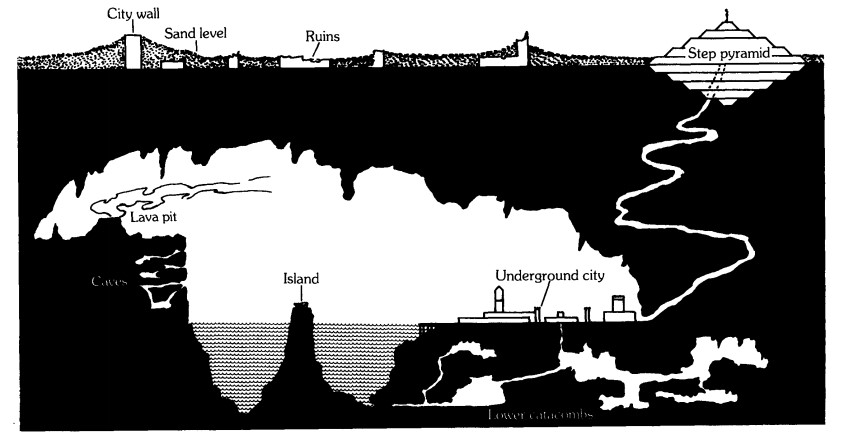
The surviving people based their new life around a huge underground lake fed by channels cut through solid rock. Built in the reign of King Alexander, the lake had been the original city's water supply. On its shores, the people grew mushrooms and other edible fungi. They built houses using stones from the ruins above. The new underground city was much smaller than the ancient capital, but it was safer because it was hidden beneath the desert sands. Above, drifting sands covered the original city, and Cynidicea was lost in the vastness of the desert. [B4 – 3]

Descent to the City
Will the PCs descend to Cynidicea proper? Will they become mired in faction infighting? Or will they somehow find a way to bind these disparate and bickering freedom fighters together and rally them against their real enemy, the Cult of Zargon, and ultimately Zargon, itself?
“Who can stand against the might of Zargon the Returner? Surely, no man is strong enough of courage and skill to face my master in combat. No god would dare confront him, for he has brought low others before. Nay, when Zargon awakens, all shall tremble as the world is born anew in his foul image.”
—Dorn, Ascendant of Zargon [Elder Evils – 144]
That passage elevates Zargon from a mere parasite to near god status, the true elder evil he ought to be, one cast down aeons ago by his enemies and is struggling to rise again.
Despised by the baatezu, feared by the gods, and all but forgotten by mortals, Zargon the Returner struggles to escape his prison to once more conquer the earth and drown the world with rivers of his slime. [Elder Evils – 144]

Cynidicia
If the PCs do descend to the city, be prepared to work. There is little said about it. There’s a simplistic and wholly inadequate map. No buildings are mapped. There are only brief paragraphs describing certain notable features, faction strongholds, and Zargon’s temple, and little else. There are also a few paragraphs suggesting further adventures to be had, but no suggestions on how to carry them out. I blame publishing issues, most specifically page count. There’s only so much Moldvay could press into 28 pages. That said, he stuffed a whole lot into them.
What to do then? Find inspiration where you can: in the 4e sourcebook The Underdark, in the Menzoberranzan boxed set, in Skullport, in Drow of the Underdark, and whatever else that might inspire you, even the City of Greyhawk boxed set, and perhaps even B6 The Veiled Society for city streets.
It won’t be an easy task fleshing out Cynidicea but it will be a labour of love.

The Lost City
Is B4 The Lost City a Greyhawk adventure module? Of course not. It’s Basic D&D and was firmly placed in Mystara in “Return to the Lost City,” in Dragon #315. But it can be easily retconned into the Flanaess. I expect quite a few have over the decades.
But where?
Well, if one were so inclined to follow in the footsteps of Robert E. Howard, a jungle setting could suffice.
They had emerged from the belt of leaves, and stared down into the lower reaches of the forest. Above them the green roof spread its dusky canopy. Below them the sunlight filtered in just enough to make a jade-tinted twilight. The giant trunks of trees less than a hundred yards away looked dim and ghostly. […]
The thicket was violently agitated, and Valeria clutched Conan's arm hard. Ignorant of jungle-lore, she yet knew that no animal she had ever seen could have shaken the tall brush like that. [Red Nails]
The Amedio would suit. There are lots of ruins hidden under its canopy.
But if we are true to Moldvay’s text, a desert setting is in order. The Bright Desert is far to small, to my thinking, for a city to be lost in. That leaves either the Paynim Steppes (which aren’t actually a desert) or the Sea of Dust. Personally, I think the Sea of Dust is ideal. It’s a vast, windswept, inhospitable tract of desolation, where we know a lost civilisation once thrived.
The Suel Imperium was located in what is now the Sea of Dust. Wicked and decadent, this empire was destroyed during a war with the Baklunish when the latter brought down the Rain of Colorless Fire, Suloise survivors fled in all directions, many crossing the Hellfurnaces into the Flanaess, where they met other Suel who had fled the long war much earlier. [LGG – 8]
Sea of Dust:
A bleak desert of powdery gray ash fills this enormous basin that was formerly the Suel Morning in the Sea of Dust Imperium. A fertile landscape once extended for 1,000 miles west and south until it was inundated by the Rain of Colorless Fire, sent in retaliation by the survivors of the Baklunish Empire after it had been brought low by the Invoked Devastation cast by the Suloise a millennium ago. What remains is an endless vista of ash and dust shaped into dunes. Howling desert winds often whip the surface into choking clouds that strip flesh from bone, making vision impossible and breathing a torment. This environment is made even worse by the addition of volcanic ash and cinders that rain down from the Hellfurnaces to cover the already ghastly landscape. Below the dusty surface, the ash is packed and nearly hard as rock; no plant will grow here. [LGG – 154,155]

We know there are people living there, clinging to existence despite how unforgiving existence in the Sea of Dust is, even on its fringe.
The fringes of this vast basin also hold examples of humanity. A tall, slender folk of ebony hue dwells on the southwest edge of the desert, pursuing a nomadic life where the caustic dust gives way to fertile soil. Another human race lives under the shadow of the Hellfurnaces on the desert's eastern border. These short, stocky people cover their bodies with an odorous wax to protect against the caustic dust and burning sun. [LGG – 155]
Either might have been the barbarians that sacked the city after the Rain of Colourless Fire.
We also know that there are those who’ve inexplicably braved that lethal sea in recent years.
Natives of the Sulhauts and explorers from distant lands sometimes enter the Sea of Dust and explore its few ruins in search of treasures of the ancient Suel Imperium. [LGG – 155]
Why? For ancient and esoteric knowledge, obviously.
The Society [of the Serpent] also has many ancient texts and maps showing the location of dozens of abandoned (former member) Wizard’s laboratories and strongholds, some of them in the Sea of Dust [.] [Dragon #256 – 46]

570 CY
Indeed, brave souls have discovered a well-preserved Suel settlement of modest size. Investigating further, they ascertained that they had discovered the legendary Forgotten City of the Suel. The city was blanketed in a white ash of caustic properties. […]
Eventually the band stumbled across a mage-tower protruding from the ash. Unfortunately for the searchers, many powerful wards were still in place within the tower, and these tested Aelistrifel’s magic to the utmost. Ultimately, the party found a hidden entrance to subterranean vaults. [Dragon #243 – 91]

It’s not too far a stretch to imagine our “heroes” braving the Sea of Dust for that very reason, certainly not for trade, because how lucrative could trade across the Sea actually be?
[Y]our group of adventurers joined a desert caravan. [B4 – 4]
You headed east, the same way the caravan was headed before the storm. [B4 – 4]
The storm stuck, they were separated from their caravan and their struggle to survive began.
Then, just when they thought they might surely die, they catch a flash across the sea of caustic sand…
That glint turns out to be three statues atop a buried pyramid if a strong, bearded man [B4 – 3], a child [holding] a wand in one hand and a handful of coins in the other [B4 – 3], and a beautiful woman. In her hands she held a sheaf of wheat and a sword. [B4 – 3]

Gorm, Usamigara, and Madarua do not fit our narrative. Kord (or Jascar), Wee Jas, and Brahm might.
[Dragon #87,88,90,92]

Lerara
As to the Cynidiceans, I imagine they might be a branch of Lerara. In fact, give that the underground city resides in the underoerth and that there are innumerable tunnels and caverns leading out from its cavern, it’s not too far a stretch to imagine that Cynidecea could very well be one of their settlements.
Appearance: The Lerara, once an attractive people, have degenerated thanks to a combination of inbreeding and environmental pressures over the last thousand years. Though certainly human in appearance, they are almost albinos, having chalk-white skin, very pale blue eyes, and rough, silver-white hair. Many true, pink-eyed albinos live among them. Most Lerara have receding chins and very small ears, a few having minor deformities such as one less finger or a few extra toes. Their eyes, however, have grown slightly larger and have a disturbing aspect when staring. [Dragon #241 – 45]
Special Advantages: A Lerara’s light-sensitive eyes are able to use a single candle flame or phosphorescent fungus to see within a 50['] radius. A torch illuminates a radius of 150’ for Lerara. [Dragon #241 – 46]
Languages: Leraran PCs speak a corrupt form of ancient Suloise mixed with words borrowed from the drow. [Dragon #241 – 45]
Habitat: Nearly all Lerara inhabit the northern reaches of the vast cavern-and-tunnel system under the Hellfurnances, along the Passage of Slerotin. [Dragon #241 – 45]

Indeed, Cynidicea might even be the embarkation point of Slerotin’s Tunnel.
577 CY
Some dozen years ago, a cavernous bore was found at the foot of the Crystalmists in the western end of the realm. This tunnel, which supposedly pierces the range and leads to the Sea of Dust [.] [LGG – 135]
Since the discovery of the Passage of Slerotin in 577 C.Y., an increasing number of adventurers and treasure-hunters have reached Leraran society. [Dragon #241 – 45]
Maybe Cynidicea being the start of the Tunnel is a bit of a stretch, but it does open a whole host of possibilities, doesn’t it? Deep Gnomes, Drow, Derro, Duergar, etc.

What can I say, I do so love to imagine and tinker. It’s in my nature. Given that, it’s not to hard to imagine that I would tinker here too. Would I use the maps, as published. I have. But I stripped the monsters down, judging that Moldvay’s “inhabitants” no longer held verisimilitude for me. In their place, I would (and did) repopulate the upper pyramid with desert creatures that wiggled their way in. I was liberal with undead in the middle, just to ensure my players would give it wide berth until they were stronger and better equipped. I also enhanced the lower “upper” levels with a warren of wererats. And a giant ant colony.
Zargon the Returner
The lower tiers were remade into a Lovecraftian dungeon delve. No manticores. No chimeras. No blue dragons. Lots of puddings and slimes and shriekers and the like, ghouls and ghasts and things that go bump in the depths of the dark.
As to Cynidicea proper, I thought it too small, to grid-like, too neat.
And as to King Alexander, I renamed him Ozymandias. You know I did.
All in all, I did a complete rewrite. But that’s me. I do like to tinker. Sadly, I did not run it to completion. Not even close.
Granted, one could just run B4 as is. It is a masterpiece, after all. Designers have come back to it time and again: there is a foreshortened version of it in B1-9 In Search of Adventure; it was revisited in Masque of Dreams in Dungeon #142, and in Mystara: Return to the Lost City in Dragon #315; made mention of alongside Zargon in 2007’s Elder Evils sourcebook; was expanded and expounded upon in the Vault ofPandius as The Lost City Campaign Sourcebook; and most recently, Goodman games gave it a full treatment in its Original Adventures Reincarnated.
That’s a lot of love lavished on this aged gem. And it deserves it.
So, is B4 The Lost City in my top ten? It is.
I love it. It ticks so many of my boxes: a lost, degenerate civilisation; "chaotic" cultists; Lovecraftian horrors! So good!
Is it in your top ten list?

"Nothing beside remains. Round the decay
Of that colossal wreck, boundless and bare
The lone and level sands stretch far away."
—  Ozymandias, by Percy Bysshe Shelly


One must always give credit where credit is due. This post is made possible primarily by the Imaginings of Gary Gygax and his Old Guard, Lenard Lakofka among them, and the new old guards, Carl Sargant, James Ward, Roger E. Moore. And Erik Mona, Gary Holian, Sean Reynolds, Frederick Weining. The list is interminable.


The Art:
Cover art, by Jim Holloway, from B4 The Lost City, 1982
Salvation, by Jim Holloway, from B4 The Lost City, 1982
The Dragon, by Howard S. Daley, from "Red Nails" in Weird Tales, 1936
Zargonby Jim Holloway, from B4 The Lost City, 1982
Cynidiciansby Jim Holloway, from B4 The Lost City, 1982
Masque of Dreams details, by Michael M. Kaluta, from Dungeon #142, 2007
Queen Zenobia, by Jim Holloway, from B4 The Lost City, 1982
Demetrius,  by Jim Holloway, from B4 The Lost City, 1982
Wererats, from B4 The Lost City, 1982
Lost City cross-section, from B4 The Lost City, 1982
Lost City map, from B4 The Lost City, 1982
Priestess of Zargon, by Michael M. Kaluta, from Dungeon #142, 2007
Lazarretti map detail, from Dragon Magazine #118 - 121, 2005
Elayne Mystica, by Valarie Valusek, from Dragon #139, 1988
Zargon, from Elder Evils, 2007

Sources:
9025 World of Greyhawk Folio, 1980
1015 World of Greyhawk Boxed Set, 1983
2009 Monster Manual 1e, 1977, 1978
9049 B4 The Lost City, 1982
11743 Living Greyhawk Gazeteer, 2000
Elder Evils, 2007
Dragon Magazine #87,88,89,90,92,230,241,243,256,315
Dungeon Magazine #142
Red Nails, Robert E. Howard, 1936